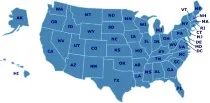
Although a credit or deduction could be helpful for homeschoolers, HSLDA opposes any tax break legislation that could come with governmental regulations. Homeschoolers have fought far too long and much too hard to throw off the chains of government regulation that hinder effective education and interfere with liberty. It would be inconsistent and foolhardy to accept tax incentives in exchange for government regulation. However, HSLDA supports tax credits that promote educational choice without threatening any regulation of homeschoolers. - See more at: http://nche.hslda.org/docs/nche/000010/200504150.asp#sthash.tvLv2ItR.dpuf
Share successes and ideas and build a helpful, welcoming archive for the new unschoolers, the newly-unschooling, and the nicely unschooling.
Would-be reformers of the current educational system, including corporate altruists nor philanthropic foundations, have shown much interest so far in homeschooling's increasing popularity. Instead, they've focused on the promotion of charter schools and school vouchers. In this article, Greg Beato details some of the efforts of big business to reform public schooling, taking a look at corporate sponsorships, grants, and scholarship programs. It examines the dichotomy between those who criticize the system as an Industrial Age artifact and simultaneously push for more standardization and regimentation. Homeschoolers have provided an alternative that offers positive results in academics and other accomplishments. The article continues by looking at the future of the relationship between business and homeschoolers, from increasing scholarship opportunities to partnerships between homeschooling groups and corporations.
We all have busy lives, yet we want the most productive preschool activities for our children with as little fuss as possible. Here you'll find activities to stimulate gross motor skills, preschool songs, activities to develop visual perception, numeracy, and mathematical concepts, language building activities, and children's bible lessons and faith building activities.
Future School online learning systems support your entire family in both the classroom and the home using only qualified teachers to ensure its educational services. They offer tutoring students in the home, classroom and after school facilities, providing both face-to-face, telephone and online assistance in the two core areas of literacy and numeracy. Future School has also many years experience in the development of Basic Skill Tests in mathematics and English covering years 3, 5, and 7, including the materials, delivery, marking, psychometrics and reporting to Education Departments, schools, and parents.
31.3(1) Licensing requirements. A person who provides instruction to or instructional supervision of a student receiving competent private instruction shall be either the student’s parent, guardian, or legal custodian or a person who possesses a valid Iowa teaching certificate or practitioner license which is appropriate to the age and grade level of the student under competent private instruction. 31.3(2) Duties. The duties of a certificated or licensed teacher practitioner who instructs or provides instructional supervision of a student shall include the following: a. Contact with the student and the student’s parent, guardian, or legal custodian at least twice per 45 days of instruction, during which time the teacher practitioner fulfills the duties described below. One of every two contacts shall be face–to–face with the student under competent private instruction. However, if the instruction or instructional supervision is provided by a public or accredited nonpublic school in the form of a home school assistance program, the teacher practitioner shall have contact with the child and the child’s parent, guardian, or legal custodian at least four times per quarter during the period of instruction. One of every two contacts shall be face–to–face with the student under competent private instruction. b. Consulting with and advising the student’s parent, guardian, or legal custodian with respect to the following during the course of the year’s visits: (1) Lesson plans; (2) Textbook and supplementary materials; (3) Setting educational goals and objectives; (4) Teaching and learning techniques; (5) Forms of assessment and evaluation of student learning; (6) Diagnosing student strengths and weaknesses; (7) Interpretation of test results; (8) Planning; (9) Record keeping; and (10) Other duties as requested or agreed upon. c. Providing formal and informal assessments of the student’s progress to the student and the student’s parent, guardian, or legal custodian. d. Annually maintaining a diary, record, or log of visitations and assistance provided. e. Referring to the child’s district of residence for evaluation a child who the practitioner has reason to believe may be in need of special education. 31.3(3) Limitations. A licensed Iowa practitioner who is employed or agrees to provide instruction or instructional supervision of programs of competent private instruction shall not serve in that capacity on behalf of more than 25 families, or more than 50 children of compulsory attendance age, in an academic year unless the service is provided pursuant to the teacher’s employment with a nonaccredited nonpublic school. A licensed Iowa practitioner who is employed by a public or accredited nonpublic school to provide instruction or instructional supervision through a home school assistance program, as defined in subrule 31.4(5), shall not serve in that capacity on behalf of more than 20 families, or more than 40 children of compulsory attendance age, in an academic year. A licensed practitioner or authorities in charge of a public or accredited private school may seek exemption from the above limitation by submitting a written request to the director of education. Exemptions shall be granted when the director is satisfied that the limitation will pose a substantial hardship on the person or the school providing instruction or instructional supervision, and that the best interests of all children being served by the practitioner or school will continue to be met.
The Princeton Review offers personalized private tutoring, test prep, and admission products and services to help students knock down barriers and achieve their academic goals. Search for schools and careers, find test preparation courses, get information on scholarships, and more. Covered tests include: ACT, AP, PSAT, SAT, SAT Subjects, TOEFL, ISEE, MCAT, DAT, OAT, LSAT, GRE, GMAT, CFA, and USMLE.
Chevra was formed in September 1998 as an online support community for Jewish homeschoolers of all varieties. It tends to be a very chatty place where they discuss Jewish observance, homeschooling, family life, outside interests, and (the favorite topic) why the laundry never seems to get done. If you are looking for a group that discusses only homeschooling and Judaic resources, you may very well be disappointed in Chevra's free-wheeling discussions of everything under the sun, but there is lots of great information here.
Homeschooling can reveal many things. This article shares some insight into the thoughts of a homeschooling mom.